

Natural Japanese · Part 1
Most books teach correct Japanese. This one also teaches the Japanese people actually use.
Foundations & Everyday Japanese
Real pages, not a sample layout.
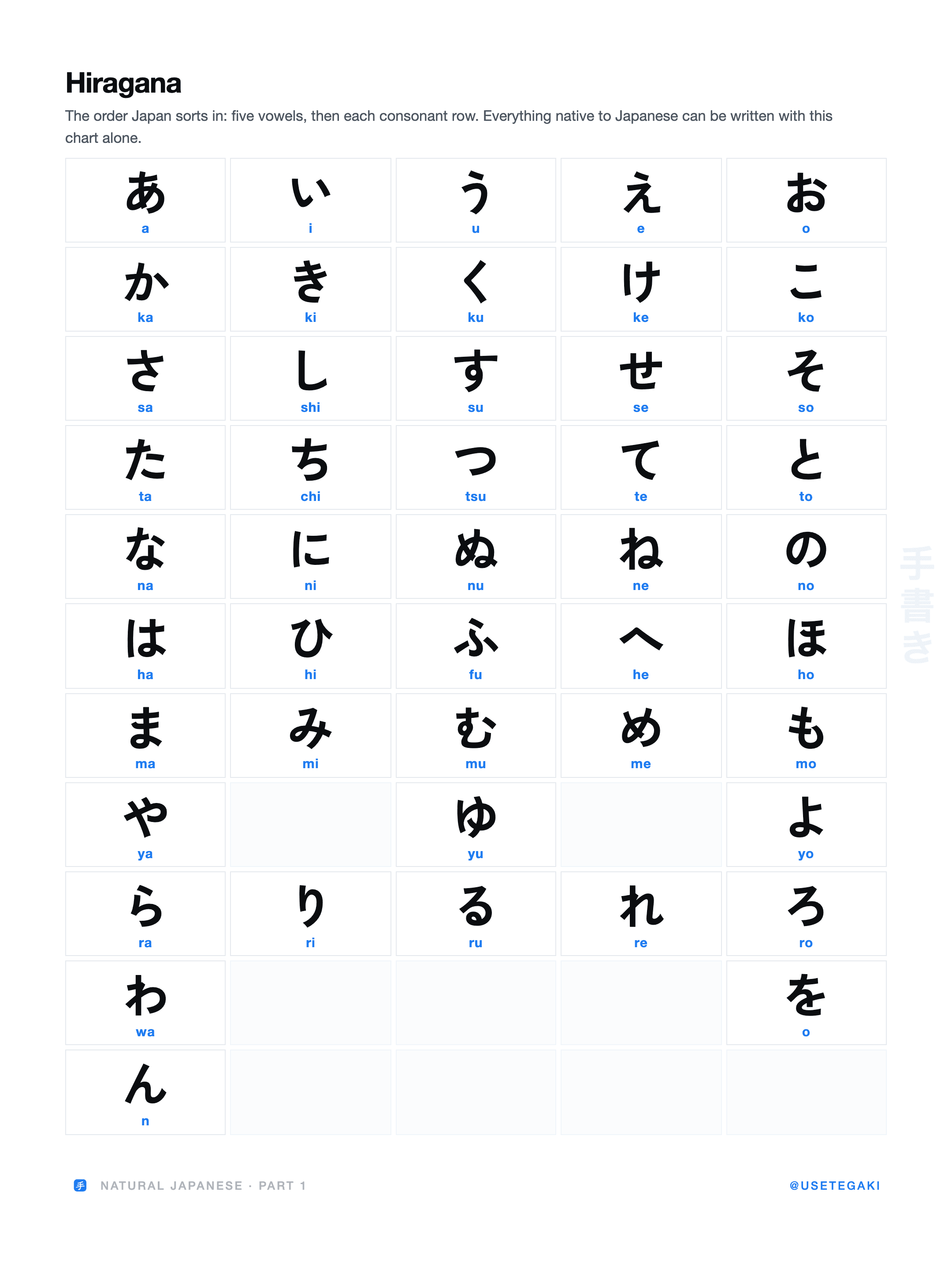
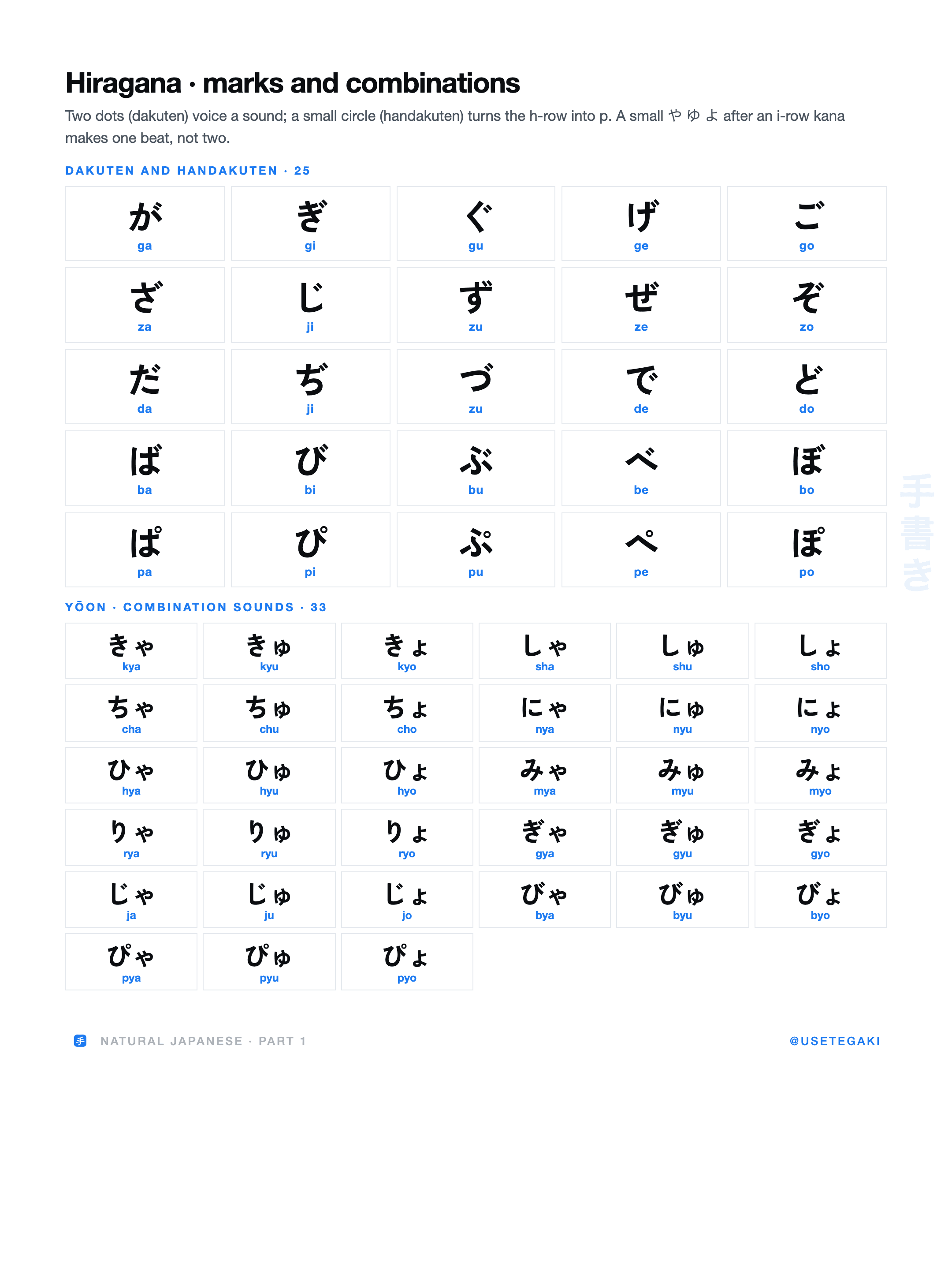
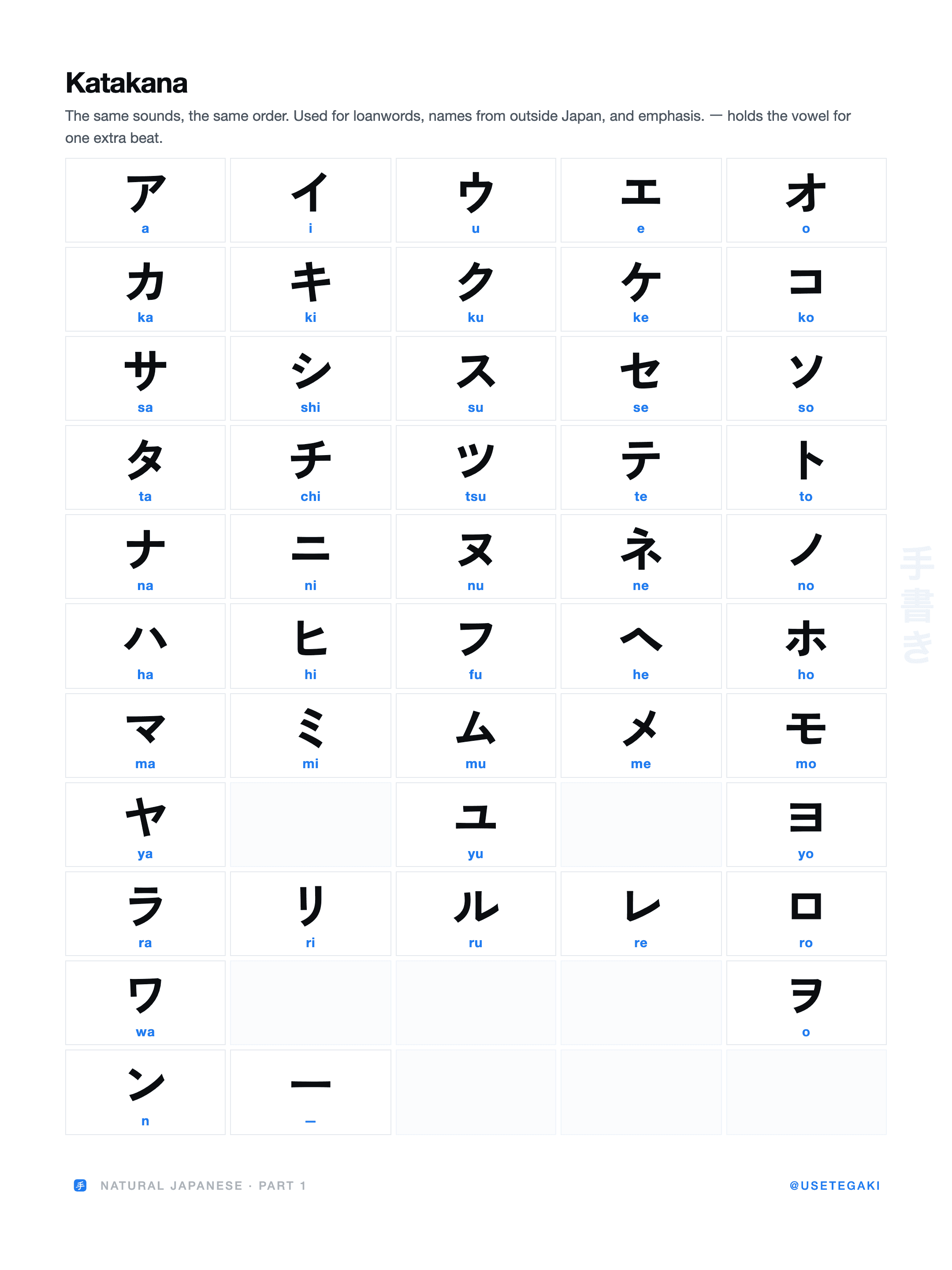
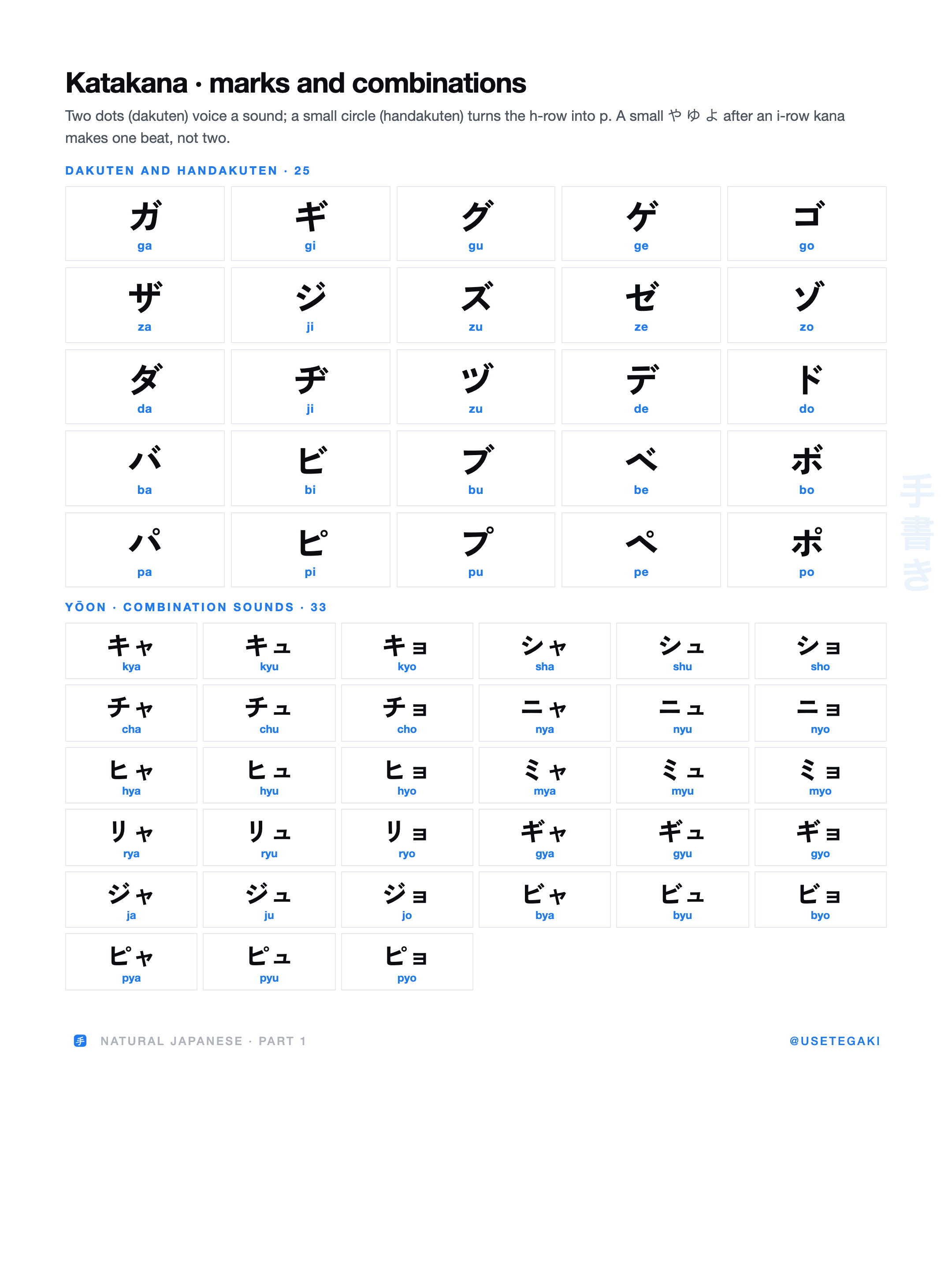
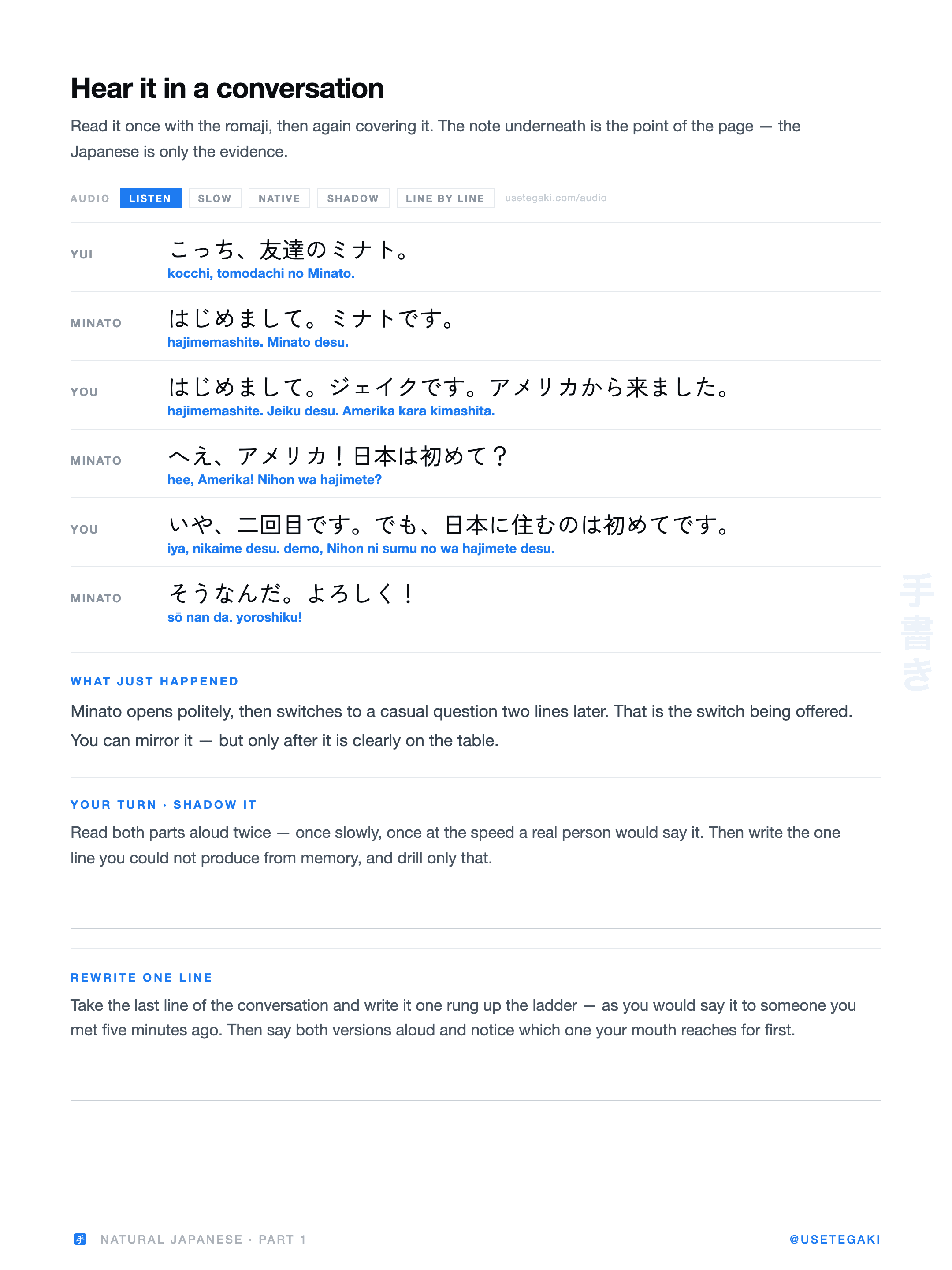
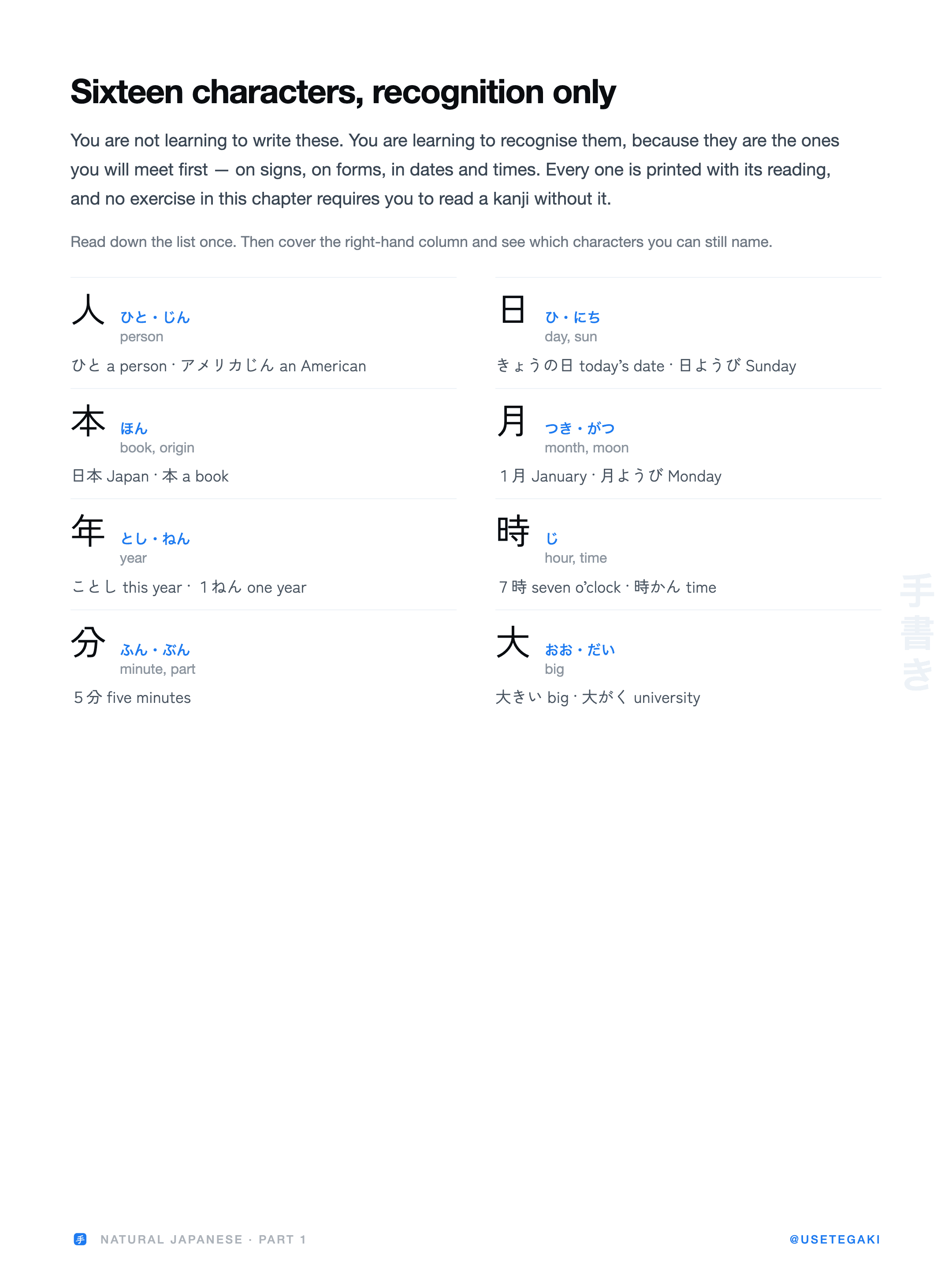
e, maji? sore yabakunai?
You can know hundreds of grammar points and still freeze when a friend says that — or when the polite conversation you were having five minutes ago suddenly turns casual. Closing that gap is the whole point of this book.
Same sentence. Five people. Try it.
From Chapter 2 on, every piece of Japanese in the book carries one of these labels. Not levels to climb — choices. Three you learn to say, two you only need to recognise.
You want to say “That’s expensive, isn’t it.” to…
たかいですね
Someone serving you, and anyone you have just met.
Grammar is the first third of it.
Correct Japanese
Every grammar term is explained before it is used, and no exercise tests you on Japanese the book has not taught you yet. Each chapter keeps a list of exactly what it is allowed to ask.
How it actually sounds
The same sentence again as a person would really say it — particles dropped, endings contracted, half of it left out because both speakers already know it.
Who you can say it to
Every line says who you can use it with. Missing that is why textbook learners sound like textbooks — and why they get the tone wrong with people their own age.
Six chapters, each ending in something you can do.
Eight beats, every time.
Chapter 1 teaches characters and the rest teach language, so they move differently. Both end with you producing something rather than reading something.
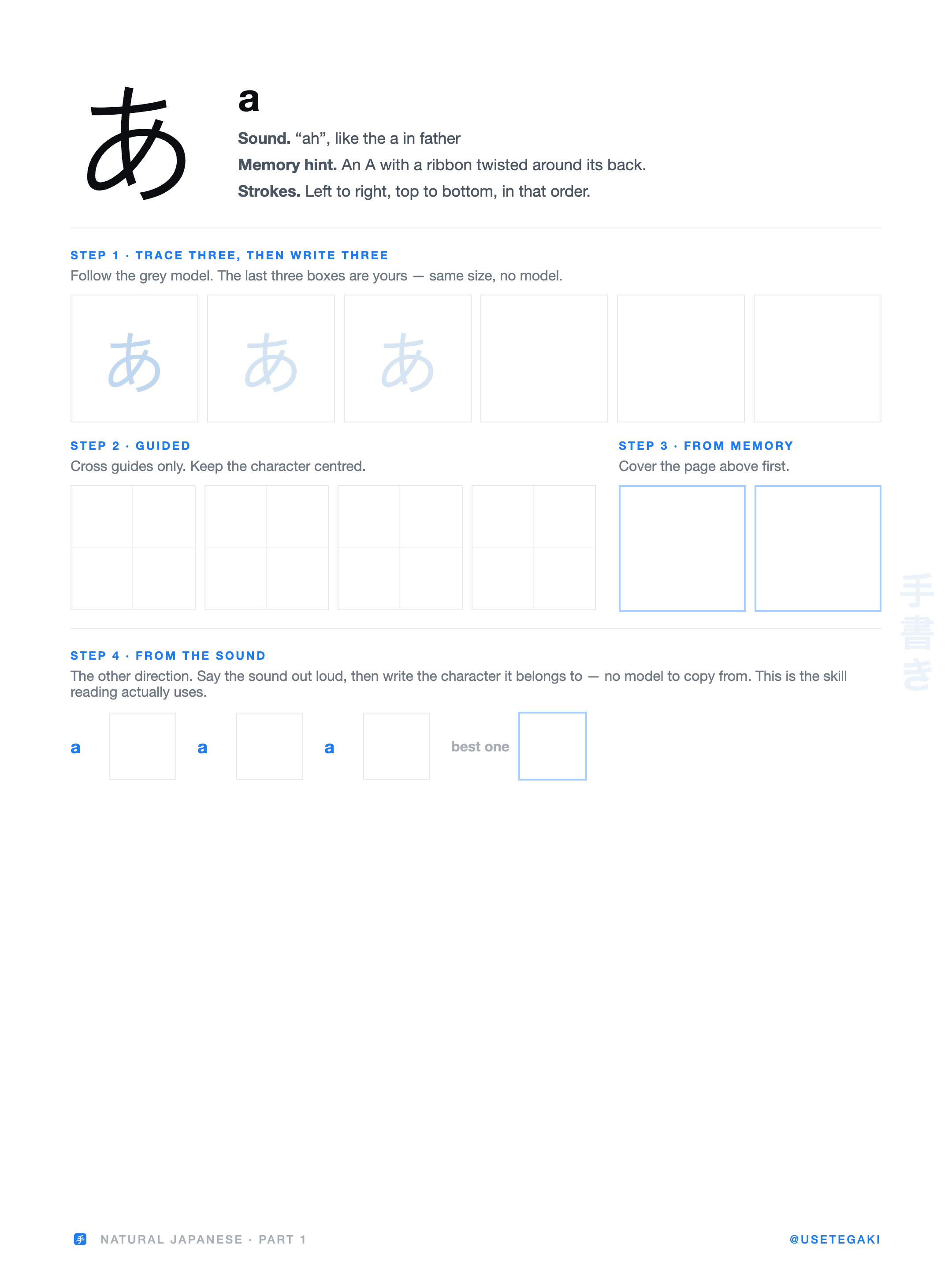
A character page
Chapter 1- 01Before you startWhat this set of characters is, and why it exists.
- 02OverviewThe whole set with readings, in the order Japan sorts it.
- 03The characterIts sound, and a hint for remembering the shape.
- 04Four writing stepsTrace, guided, from memory, then from the sound alone.
- 05Find itThe sound is the prompt; you circle the character.
- 06A real wordOnce every character in it has been taught.
- 07Recall sheetThe full set from memory, three dated runs.
- 08Review and checkpointWord search, speed test, then twenty points you mark.
A language lesson
Chapters 2–6- 01SituationWhere you are, and who just spoke to you.
- 02UnderstandWhat you are trying to communicate, in plain English.
- 03LearnThe structure, with every grammar term defined first.
- 04See itThree to five examples you would actually hear.
- 05CompareThe same idea moved along the register ladder.
- 06NoticeWhat was dropped or shortened, and why.
- 07PracticeRecognition first, production second.
- 08Scenario and missionYou choose each reply, then take it outside the book.
Told straight, three ways.
Consistency beats session size. Twenty minutes daily outperforms three hours on a Sunday, because language lives in retrieval and retrieval needs repeating across days.
7–9 months
The pace that survives a full-time job. Slower, but it finishes — and it beats the person who does three hours twice and stops.
4–5 months
One session, one lesson, immersion on top. This is what the book was designed around.
2–3 months
Needs real immersion alongside it and one genuine rest day. The limit is whether you are still absorbing, not the clock.
On top of any of them: thirty minutes a day of Japanese you do not understand yet. The book treats that as required, not optional — it is what teaches your ear where the words end.
What you can actually do.
- Read both kana sets without romaji
- Build your own sentences, past and present
- Introduce yourself and ask a question back
- Ask follow-up questions instead of interviewing
- Tell polite from casual, and choose on purpose
- Handle a café, a konbini and a station
- Read a sign, a menu and a message
- Decline something without saying no
- Settle a plan and confirm it
- Recognise sixty-four kanji on sight
- Pages
- 434, numbered
- Chapters
- Six, plus capstone and assessment
- Kana
- Hiragana and katakana in full, one page per character
- Kanji
- 64, recognition only — always printed with a reading
- Romaji
- Under every word in Chapter 1, gone by the capstone
- Audio
- Being recorded — free to every buyer when it lands
- Format
- PDF — read on anything, print what you want to write on
- Licence
- One personal licence per purchase
It is not for everyone.
This is for you if
- You are starting from zero, or close to it.
- You intend to travel, study, work or live in Japan.
- You care about making friends there, not only about passing an exam.
- You want to understand people your own age, not just service announcements.
This is not for you if
- You need a JLPT prep book. The JLPT appears here as a difficulty marker, never as the goal.
- You are already at N3 and have a method that works. Part 2 is the one to wait for.
- You want maximum slang. Natural Japanese is the right register for the moment, not the loudest one.
What no book can promise
Not fluency, and not intermediate Japanese. A book gives you the material and the order; it cannot give you the hours or the conversations. What Part 1 gives you is a real, usable foundation — and roughly the point where studying stops feeling like homework and starts feeling like access.
Natural Japanese · Part 2
Natural Conversation & Intermediate Japanese
What happens after the first ten minutes — and the Japanese people use once they stop being careful around you.
- 7–8Connecting ideas, giving reasons, saying what you think
- 9Kanji and reading at volume
- 10Youth language and slang, produced rather than recognised
- 11Immersion: real media, real speed
- 12Long-form conversation without falling back to English
In progress. Subscribers get it the day it publishes, at no extra cost.
Start reading tonight.
434 pages, PDF, one personal licence. Yours the moment you buy it.
Or one email a week: a kanji, a word, and something worth knowing.
© 2026 Tegaki · @usetegaki